Why a Residential Electrician Should Inspect Your Electrical Panel
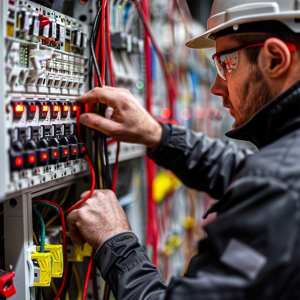
Your electrical panel sits quietly on the wall and does its job without much attention, right up until something goes wrong. Most homeowners rarely open it. Fewer still know what they are looking at beyond the labels on the breakers. That is understandable. The panel is not an appliance you interact with every day. It is the control center for the entire electrical system in the house, and when it begins to show signs of age, stress, or poor workmanship, those problems can ripple through every room.
A residential electrician sees the panel differently. To a trained eye, it tells a story about the house. It can reveal whether past upgrades were done correctly, whether circuits are overloaded, whether moisture has found its way inside, and whether the system is keeping up with how the home is actually being used. That perspective matters because modern homes ask much more from their electrical systems than homes built twenty, thirty, or fifty years ago.
I have seen panels in tidy, well-maintained homes that looked harmless from the outside but had serious issues inside the cover. I have also seen older panels that were still serviceable because someone had kept them in good condition and upgraded the system thoughtfully over time. Age alone does not decide whether a panel is safe. Condition, installation quality, circuit load, and compatibility of parts matter just as much.
The panel is more than a box of breakers
Many homeowners think of the panel as a simple switchboard. If a breaker trips, you reset it. If the lights work, the panel must be fine. In practice, the panel manages the distribution of power throughout the house and serves as a key safety device. Breakers are supposed to trip when circuits draw too much current or when a fault occurs. Connections inside the panel need to stay tight and clean. Bus bars need to remain free of overheating and corrosion. The grounding and bonding must be correct.
When any of those pieces are compromised, symptoms can show up in surprising ways. You may notice lights flickering when the microwave starts. A bedroom breaker may trip whenever a space heater runs. Outlets in one area may feel warm. An EV charger installation may be delayed because the panel cannot handle the added load. Even a home that appears to function normally can hide unsafe conditions behind the dead front cover.
A residential electrician does not inspect the panel in isolation. They read it in context. They ask how old the house is, what major appliances have been added, whether there have been renovations, and whether anyone has noticed nuisance tripping, buzzing, or heat. That broader view often catches problems that a quick glance misses.
What a trained inspection can uncover
A proper panel inspection is not just a matter of flipping breakers and checking labels. It involves visual examination, load awareness, safety checks, and judgment built from field experience. Some issues are obvious the moment the cover comes off. Others take a little more interpretation.
Loose terminations are one of the most common findings. Electrical connections naturally expand and contract with heating and cooling cycles. Over time, a connection that was once secure can loosen. A loose connection creates resistance, and resistance creates heat. Heat damages insulation, weakens components, and in severe cases can char the bus bar or melt part of a breaker housing.
Then there is the issue of double tapping, where two conductors are placed under a breaker terminal not designed for that purpose. People do this when they run out of breaker space or when they try to add a circuit quickly. Sometimes it works for a while. Sometimes it creates intermittent problems that are difficult to diagnose. Either way, it is a sign that the panel may have been pushed beyond its intended use.
Improper breaker brands are another recurring issue. Homeowners sometimes buy a breaker that physically fits and assume that means it is acceptable. Compatibility is more specific than that. Panels are listed and labeled for certain breaker types. Using a mismatched breaker can lead to poor contact on the bus, arcing, and unreliable protection. This is not the sort of detail most homeowners would know to check, but a residential electrician checks it immediately.
Signs of moisture matter too. Rust stains, oxidation, or water tracks inside the panel can point to a bigger problem nearby, such as a leaking service mast, condensation, or water intrusion through the exterior wall. Electricity and moisture are a bad partnership. Catching that early can prevent both equipment damage and a much more expensive repair later.
Why age matters, but not in the way people think
Homeowners often ask whether a panel should be replaced simply because it is old. The answer depends on the panel’s brand, condition, capacity, and history. Some older panels remain safe when maintained properly. Others deserve close scrutiny because certain models have known reliability concerns, or because they no longer meet the practical demands of the house.
A house built in the 1970s may still have a panel sized for a lifestyle that looked very different from today’s. Back then, the home may not have had a second refrigerator in the garage, a hot tub, a home office with multiple monitors, electric vehicle charging, or high-capacity kitchen appliances. Central air may have been added later. So may a basement remodel, workshop, or outdoor entertainment area. Every addition pushes the electrical system further from what it was originally designed to support.
This does not always mean the panel is unsafe. It often means the margin for error has narrowed. A panel with little spare capacity leaves fewer options for future work, and it increases the chance that someone will take shortcuts, such as installing tandem breakers where they are not permitted or tapping into an already busy circuit. An inspection helps determine whether the panel is simply old, or whether it is undersized, deteriorated, or being used beyond reason.
Hidden workmanship problems are common
One of the less discussed reasons to have a Residential Electrician inspect your panel is quality control. Not every past installer did careful work. Electrical systems carry the fingerprints of every remodel, service call, and DIY project that came before. You can often tell when multiple people have worked inside a panel over the years. Circuit directories become vague. Wire routing grows messy. Splices appear where they should not. Neutrals and grounds may be landed incorrectly. Abandoned conductors may be left behind.
Poor workmanship does not always create an immediate failure. That is part of what makes it dangerous. A sloppy panel can keep working long enough to give a false sense of security. Then the first serious problem shows up during a heat wave, a holiday gathering, or after a new appliance is installed.
I remember a service call at a house that had “random flickering” in the dining room and kitchen. The homeowner assumed the light fixtures were failing. The problem turned out to be a combination of an overloaded multiwire branch circuit and a loose neutral connection in the panel. Nothing looked dramatic from the outside. Inside, the neutral bar showed heat discoloration near one lug. That kind of issue is exactly why inspection matters. It was not just inconvenient. It had the potential to damage electronics and create a real safety hazard.
Safety devices only work if the panel is healthy
A lot of people trust breakers the way they trust seat belts. They are there if you need them. That is fair, but only if the equipment is compatible, properly installed, and in good condition. A breaker cannot do its job reliably if its connection to the bus is compromised or if the panel itself has damage.
Modern homes also rely increasingly on AFCI and GFCI protection. These devices address specific risks, such as arc faults in living spaces and ground faults in wet or high-risk areas. Whether those protections are required depends on location, circuit type, and code cycle, but from a practical safety standpoint, they are valuable when installed correctly. During an inspection, an electrician can identify missing or malfunctioning protection and explain what upgrades make sense for the home.
This is especially important after renovations. Kitchens, bathrooms, laundry rooms, garages, basements, and outdoor spaces often trigger updated protection requirements. Homeowners are sometimes surprised to learn that a beautiful remodel may hide electrical shortcuts if the final connections at the panel were not done carefully.
Insurance, home sales, and liability concerns
Electrical panel issues often surface at inconvenient times. A home inspection before sale reveals an obsolete or problematic panel brand. An insurance carrier asks for an update on the service equipment. A buyer requests repairs after their inspector notes overheating, missing knockouts, improper bonding, or open breaker spaces.
At that point, the homeowner is reacting under time pressure. Costs feel higher because the repair is no longer optional, and there may be a closing date or underwriting deadline looming. A proactive inspection by a residential electrician gives you time to plan. If the panel is in good shape, you gain peace of mind and documentation. If there are issues, you can decide whether a targeted repair or a full replacement is the better investment.
Insurance companies vary widely in how they assess electrical risk, but some panel brands and conditions draw immediate concern. When a professional identifies those issues early, the conversation is easier. You are not scrambling to explain a surprise finding three days before signing papers.
The warning signs homeowners should never ignore
Most panel problems do not announce themselves loudly at first. They tend to begin as small irregularities. A breaker that trips once a month becomes one that trips every week. An outlet that always worked fine starts feeling warm with normal use. A faint buzzing near the panel appears only when the dryer and oven run at the same time.
If you notice any of the following, do not wait for convenience to improve before making the call:
- Breakers trip repeatedly without an obvious one-time cause
- The panel feels warm, smells burnt, or makes buzzing sounds
- Lights dim or flicker when large appliances start
- You see rust, staining, or other signs of moisture near the panel
- The home is adding major loads such as HVAC equipment, a hot tub, or EV charging
None of these symptoms automatically means catastrophic failure. Some have straightforward explanations. The point is that they are not normal, and they deserve trained attention.
Why DIY inspection has limits
There is a big difference between a homeowner being observant and a homeowner diagnosing a panel safely. Reading the circuit directory, checking whether breakers are labeled clearly, or noticing visible rust on the enclosure can be useful. Removing the cover and evaluating internal components is a different matter. Even with the main breaker off, parts of the service can remain energized. That is not the place for guesswork.
There is also a knowledge gap that no video can close completely. A homeowner might spot a messy panel and assume aesthetics are the problem, while missing a subtle sign of bus damage. Or they may focus on a breaker that trips, when the underlying issue is an undersized conductor, a shared neutral problem, or a load calculation issue that affects several circuits.
A residential electrician brings both safety procedures and pattern recognition. That combination matters. In the field, the same symptoms can point to very different causes depending on the age of the panel, the service size, the wiring method, and the mix of loads in the home. Experience keeps the diagnosis grounded.
Upgrades are easier when the panel has been assessed first
Many homeowners only think about the panel when they want to add something. That could be central air, a tankless water heater, a finished basement, a standby generator, or a Level 2 EV charger. These are exactly the moments when a panel inspection pays off.
The electrician can determine whether there is https://messiahmwqb471.publishlane.com/posts/residential-electrician-tips-for-safer-electrical-outlets enough physical space for new breakers, whether the panel is listed for tandems if space is tight, whether the service amperage is adequate, and whether the calculated demand justifies a larger upgrade. Sometimes the answer is simpler than people expect. A subpanel may solve the space issue. In other cases, a full service upgrade is the right call because the home has genuinely outgrown the original system.
Skipping the inspection stage often leads to frustration. A homeowner buys equipment assuming installation will be simple, only to learn that the panel is obsolete, full, or not suitable for the added load. A modest planning step saves a lot of backtracking.
What a good panel inspection usually includes
The specifics vary by home and by local practice, but a thorough inspection is usually more than a glance inside the box. It should give the homeowner useful information, not just a thumbs up or thumbs down.
A competent visit often covers these points:
- Overall panel condition, including enclosure, cover, labeling, and visible signs of damage
- Breaker compatibility, evidence of overheating, and the condition of bus connections
- Grounding and bonding arrangements, neutral terminations, and obvious code or safety concerns
- Capacity considerations based on existing major loads and any planned additions
- Clear recommendations, separating urgent safety repairs from longer-term upgrade options
That last part is important. Not every issue demands immediate replacement. Good electricians know how to prioritize. A missing panel legend and a scorched bus stab are not in the same category. Homeowners need practical judgment, not alarmism.
Repair or replace, the answer depends on the evidence
When a panel issue is found, the next question is almost always whether repair is enough. Sometimes it is. A loose lug can be corrected. An incompatible breaker can be replaced with the proper type. Corrosion caused by a fixable moisture source may be limited to a few components. A labeling problem can be cleaned up during a broader maintenance visit.
Other times, replacement is the smarter path. If the bus bars are damaged, if the panel has a problematic history, if there is extensive overheating, or if the service is plainly undersized for the home’s current needs, repair becomes a temporary patch on a system that has already shown its limits. Spending money twice is rarely satisfying. A good electrician should explain the trade-off honestly.
This is where experience really shows. Two panels can look similar to an untrained eye, but one may be a good candidate for selective repair while the other is a poor bet because the damage is deeper or the product line itself is no longer trustworthy. The recommendation should come from what is actually present, not from a one-size-fits-all sales script.
The value is not just safety, it is predictability
Safety is the main reason to inspect an electrical panel, but predictability is a close second. Homeowners want their systems to perform reliably. They do not want mystery tripping, recurring service calls, or failed upgrades. They want to know whether the house can support their plans and whether the equipment protecting their family is actually in shape to do its job.
That is what a panel inspection gives you. It turns a hidden, poorly understood part of the home into something concrete and manageable. You find out whether the panel is healthy, whether the wiring decisions made over the years still make sense, and whether the home is ready for the next decade of electrical demand.
For an older home, that may mean catching deterioration before it becomes expensive. For a recently purchased home, it may mean confirming that the previous owner’s improvements were done properly. For a growing household, it may mean learning that the system needs more capacity before you add another major load.
A Residential Electrician is not there just to react when something burns out. The real value is in seeing problems before they escalate, separating cosmetic concerns from real hazards, and giving homeowners a practical path forward. When the heart of the electrical system is involved, that kind of judgment is worth far more than a quick reset at the breaker box.
Paxos Electric Company, LLC
255 NJ-15, Wharton, NJ 07885, United States
+1 973-598-8543
FAQ About Residential Electrician
What does a residential electrician do?
A residential electrician installs, inspects, maintains, and repairs electrical systems in homes. Common services include troubleshooting circuits, replacing panels, adding outlets and lighting, and completing electrical work for renovations.
When should I call an electrician for my home?
Call a licensed electrician if you notice repeated breaker trips, flickering lights, buzzing, burning odors, warm outlets, sparks, or unexplained power loss. Urgent warning signs should be addressed promptly.
Can a residential electrician upgrade an electrical panel?
Yes. A qualified electrician can evaluate the existing service, determine whether an upgrade is appropriate, obtain required permits, and install a panel sized for the home and planned electrical loads.
Do I need an electrician to install an EV charger?
A home EV charger often needs a dedicated circuit and a review of panel capacity. A licensed electrician can confirm the manufacturer requirements and complete the installation according to local electrical codes.